
PRODUCATS
PRODUCTS
NASHENG
CONTACT US
‹
›
‹
›
Product Introduction
PRODUCT DESCRIPTION
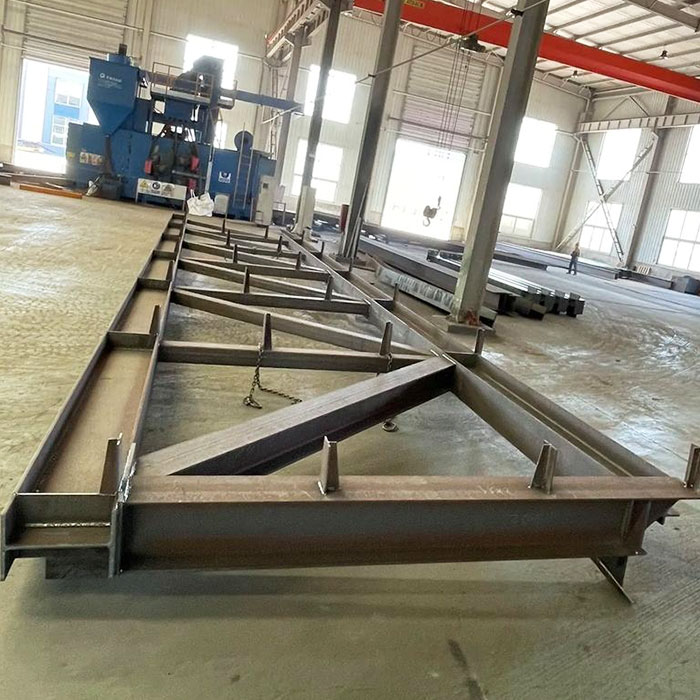
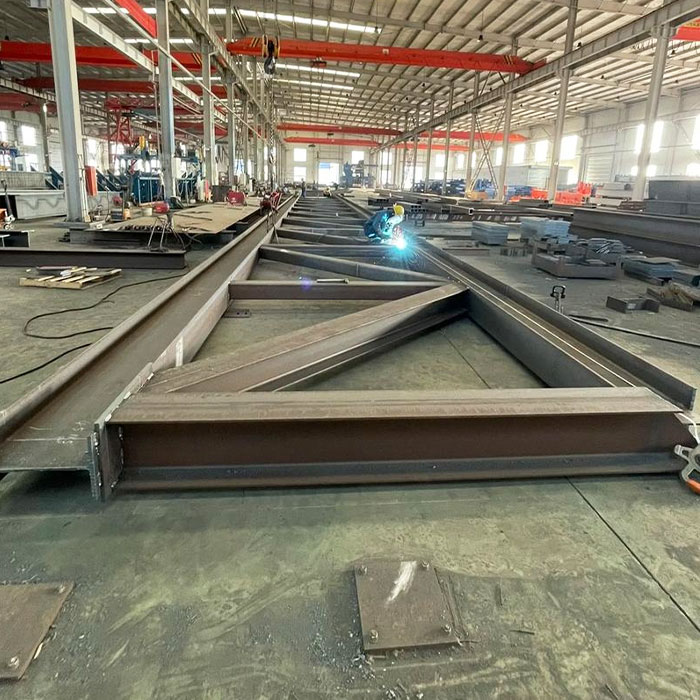
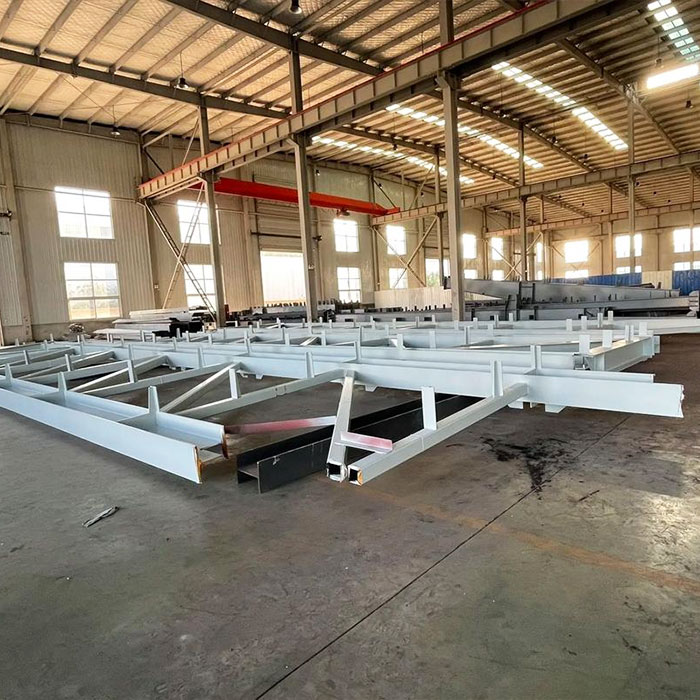
Steel trusses refer to trusses made of steel. They are often used as the primary load-bearing components in industrial and civil building roof structures, crane beams, bridges, and hydraulic gates. Various towers, such as masts, television towers, and transmission line towers, often utilize spatial steel trusses composed of three, four, or more planar trusses.
Trusses are widely used in steel structures. For example, they are often used as the primary load-bearing components in industrial and civil building roofs (roof trusses, etc.), crane beams (i.e., crane trusses), bridges, cranes (their towers, beams, or booms), hydraulic gates, and offshore oil platforms. Various types of steel grids, commonly used in the roof structures of large-span public buildings, are examples of spatial steel trusses. Various towers, such as television, transmission, drilling, and crane towers, and masts, often utilize spatial steel trusses composed of three, four, or more planar trusses.
Compared to solid beams, steel trusses use sparse web members instead of a solid web. The members primarily bear axial forces, often saving steel and reducing the weight of the structure. This makes steel trusses particularly suitable for structures with larger spans or heights. Furthermore, steel trusses can be easily fabricated into various shapes to suit specific requirements. Furthermore, because the web members use less steel than the webs of solid beams, steel trusses can often be constructed with greater height, resulting in greater rigidity. However, steel trusses have more members and joints, resulting in a more complex structure and labor-intensive manufacturing.
Among steel trusses, beam-type simply supported trusses are the most commonly used. Because these trusses have well-defined loads, internal forces in the members are unaffected by support settlement and temperature fluctuations, making them simple to construct and easy to install. However, they use a slightly higher amount of steel. Rigid frame-type and multi-span continuous steel trusses can save steel, but their internal forces are more sensitive to support settlement and temperature fluctuations, requiring higher precision in manufacturing and installation, and are therefore less commonly used. In the steel skeleton of a single-story factory building, roof steel trusses often form single-span or multi-span frames with steel columns. These trusses offer high horizontal stiffness and are better suited to large crane or vibration loads. Continuous steel trusses are commonly used in structures such as long-span bridges and mast towers with cable ties. Arched steel trusses are also commonly used in large-span public buildings and bridges. Cantilevered steel trusses are also commonly used in offshore platforms and certain housing structures. All types of towers are cantilever structures.
Steel trusses can be categorized as standard, heavy, and lightweight steel trusses based on member internal forces, member cross-sections, and node configurations. Standard steel trusses generally use single-web members, typically with a T-shaped cross-section formed by two steel angles, though cross-shaped, channel-shaped, or tubular cross-sections are also used. Nodes are connected by gusset plates. These simple structures are the most widely used. Heavy steel trusses, with their members subject to greater stress, employ H-shaped or box-shaped sections composed of steel plates or steel sections, with nodes connected by two parallel gusset plates. These trusses are commonly used for steel trusses with larger spans and loads, such as bridges and long-span roof trusses. Light steel trusses employ small angles and round steel, or cold-formed thin-walled steel sections. Nodes can be connected with gusset plates or by directly connecting the members. They are primarily used for roof structures with smaller spans and lighter roofs.
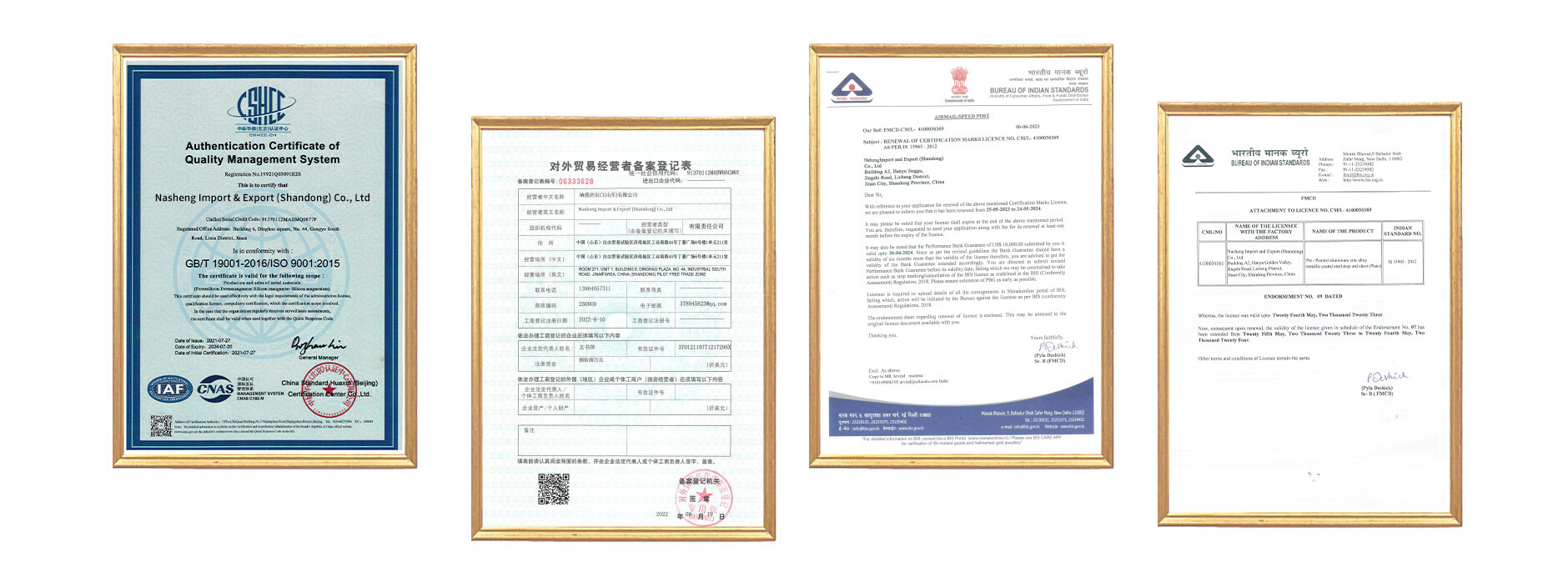
Material certificate
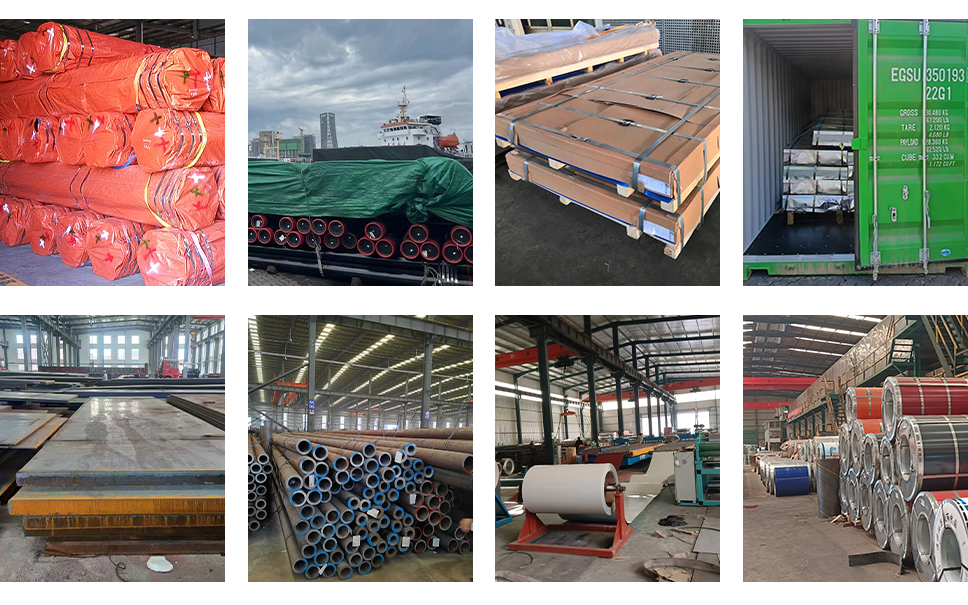
Shipping & Factory
Company Introduction
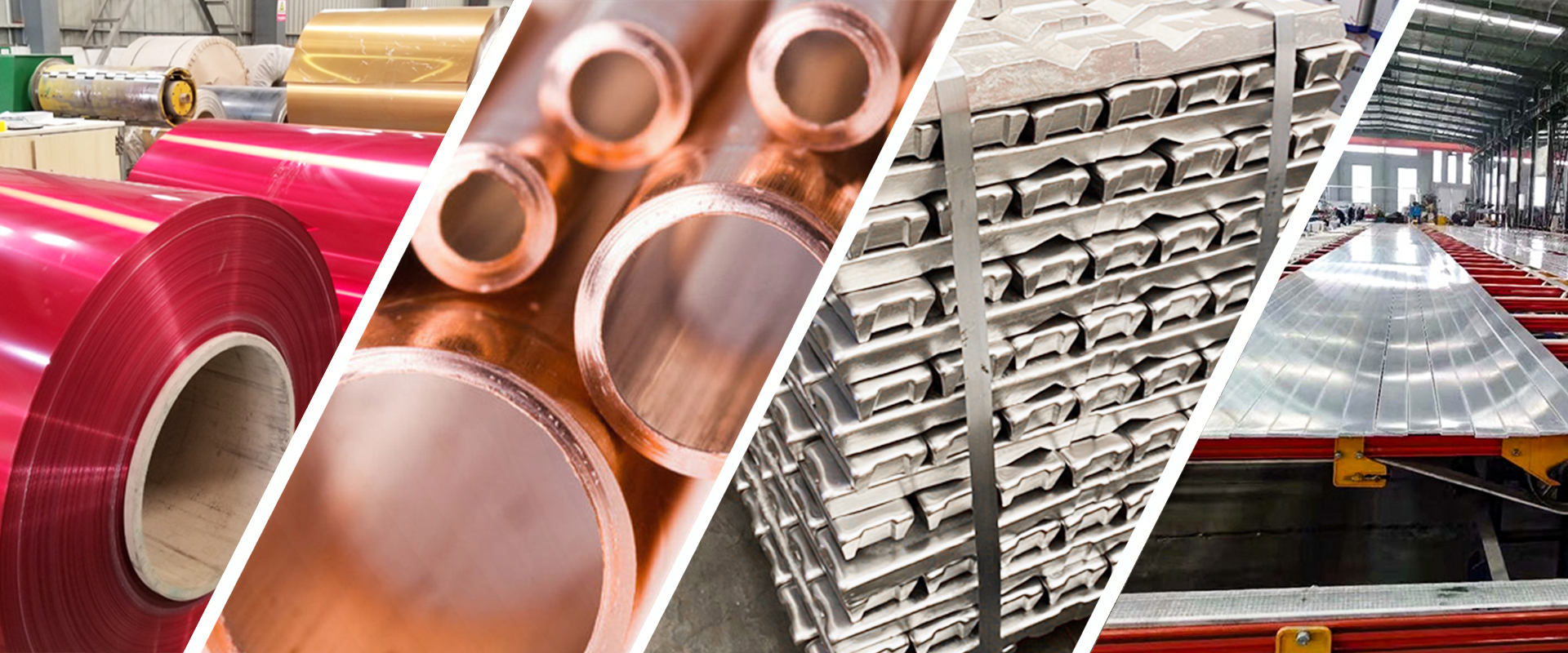
Nasheng Import & Export (Shandong) Co., Ltd. is a professional metal raw material manufacturer located in Jinan, Shandong. With more than ten years of experience in the steel industry, we have now developed into a well-known brand in China. Our products include galvanized steel coils, galvanized aluminum steel coils, color-coated coils, cold-rolled steel coils, stainless steel coils, aluminum coils, roof panels, spring steel strips, and various special steel plates.
The company customizes various grades of pipes on demand, and provides a one-stop service platform for pipes, pipe fittings, bars, etc. Our products have been exported to dozens of countries around the world.
The company has always adhered to the business philosophy of "integrity, quality, and mutual benefit", and is committed to creating high-quality products. We warmly welcome domestic and foreign merchants to visit and guide. The company will sincerely cooperate with friends from all walks of life with "reliable quality, reliable reputation, and reliable service" to create a better future!
Please give us a message